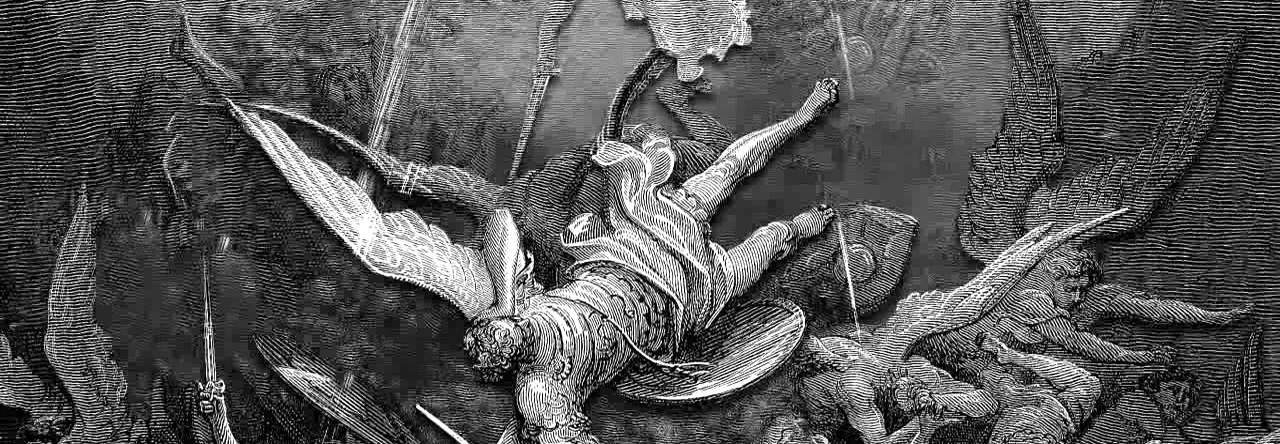
I’ve been reading Thomas Dekker’s Plague Pamphlets, particularly A Road for Run-awayes published in 1625. Not because this is now in vogue, namely, the pandemic themed readings, but because I was scouring the internet to identify an image I was about to use in illustrating the scurrilous Elizabethan attitude towards theater especially during the summer when the playhouses were closed “lest the resort unto them should ingender a plague or rather disperse it, being already begonne” (William Harrison, 1572). This is the image (without the title for help) I was trying to identify:

But as it often happens, I was easily seduced and — instead of progressing with my writing (with the illustration now securely referenced) — I ended up reading the pamphlet. Should you be interested too, it is available both as a facsimile edition (in an Oxford Clarendon Press edition published in 1925 via archive.org) and as a more-easily read transcript (thanks to Early English Books Online – Text Creation Partnership Phase I). The passage I would like to share is this:
We are punished with a Sicknesse, which is dreadfull three manner of wayes: In the generall spreading; in the quicknesse of the stroke; and in the terror which waites vpon it. It is general: for the spotted wings of it couer all the face of the Kingdome. It is quicke: for it kills suddenly; it is full of terror, for the Father dares not come neere the infected Son, nor the Son come to take a blessing from the Father, lest hee bee poysoned by it: the Mother abhors to kiss her owne Children, or to touch the sides of her owne Husband: no friend in this battell will relieue his wounded friend, no Brother shake his brother by the hand at a farewell. (B1)
And herein lies our answer to the question on whether Covid-19 will have a lasting affect on our human affairs — it will not. We are prone to think of our own experience as earth-shattering and life changing but, as a matter of fact, we will shake hands again. As people indeed shook hands after the plague was “begonne.” This is of course good news…
… but not without a negative ramification. The way I see it, we are a race* of amnesiacs in that we are exceptionally lousy at retaining information and memory gained from past misdeeds, fails, and losses. Perhaps because we do not like to be reminded of our misdeeds, fails, and losses. We also seem to be singularly self-possessed in that we tend to think of our emotions and experiences as absolutely unique — nobody gets us, especially not our parents. Unfortunately, this is sometimes the case, but mostly because our parents too like to pretend (as self-deluding amnesiacs) that they have never made our mistakes (in a misguided attempt to retain our respect when in fact nothing damages it as much as obvious hypocrisy). By the time we realize (facing our own children) how frustrating this attitude of I-know-it-all/you-know-nothing is (in both directions, not to mention what an obstacle it is in avoiding previous mistakes) we ourselves have become old and are no longer reckoned with (either because we too start pretending and/or because our off-springs cannot fathom us having had similar experiences). A cosmic irony of a sort!
So, is there hope? Or are we cursed to repeat history over and over again? I think there is, albeit a special brand of hope. Hope against hope. The possibility for us to remember — when the time comes to shake hands again and to hug again — that all is transient in this world, both the good (which is kind of bad) and the bad (which is definitely good). Hoping against hope that one would, therefore, stand for good the more and shun bad as much as possible.
And in case we want to play the deliberate amnesiac card again by waxing all philosophical about what is good or bad… Let us remember this simple guide to decent human behavior: “All things whatsoever ye would that men should do to you, do ye even so to them.” (Please note the positive/proactive wording as opposed to the negative/ passive one as in “Whatever is hurtful to you, do not do to any other person.” Doing, not just avoiding, makes all the difference.)
* There is but one human race despite of what some of us profess in order to feel superior to others.
** Hmm, what about that saying that one cannot step into the same river twice? I guess if we don’t build a bridge we are still bound to end up with wet and cold feet.
 Why ironical? Because reading Thomas Heywood’s